In this article
A box of Bonita bananas goes through the farm, selection, packing and transport until it reaches the port in Ecuador, ready to travel to its destination. What sets the journey apart is the integrated chain of Corporación Noboa: carton, plastics, trucks, a container yard and ships, all under one roof.
Where does a box begin its journey?
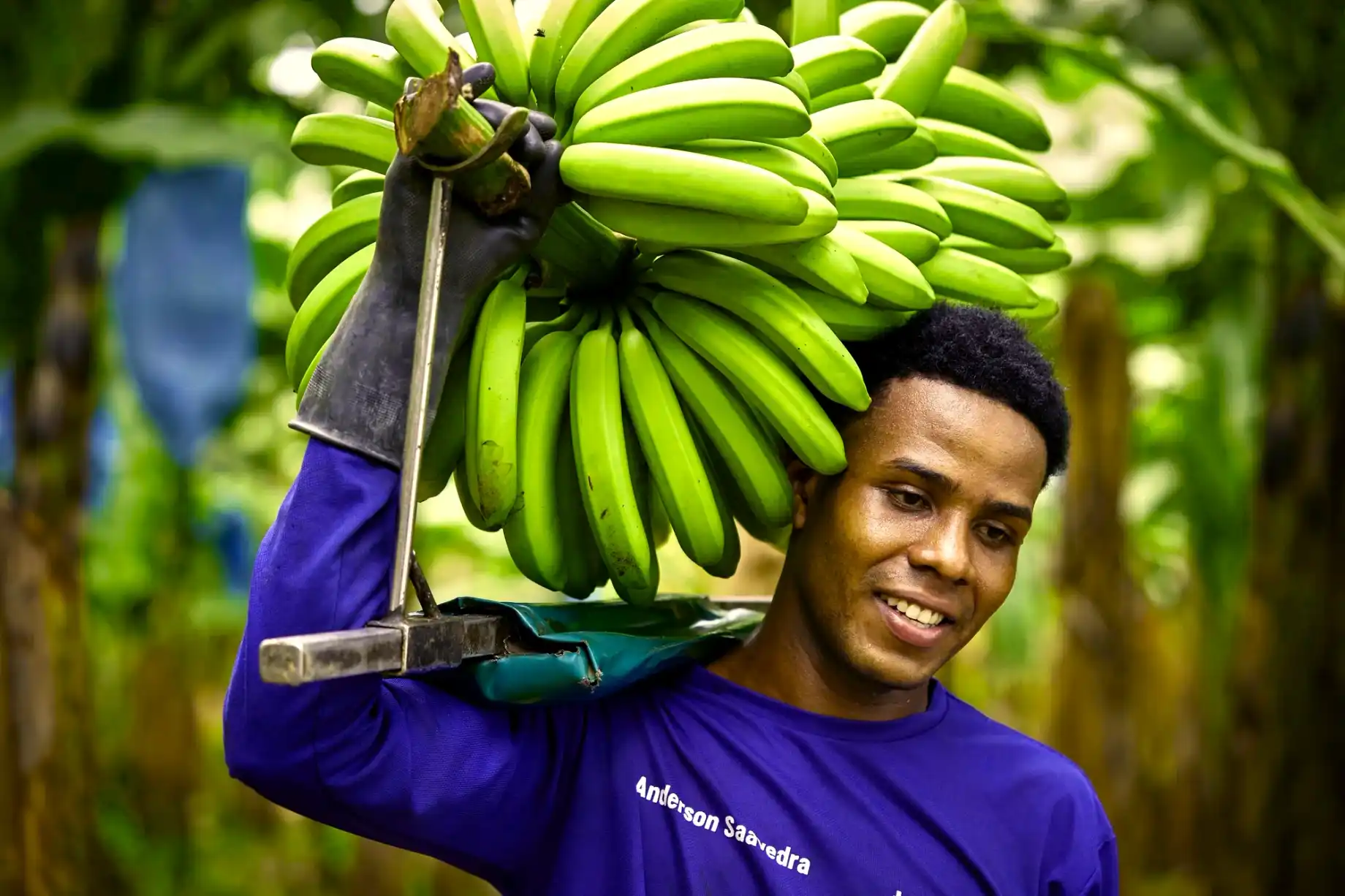
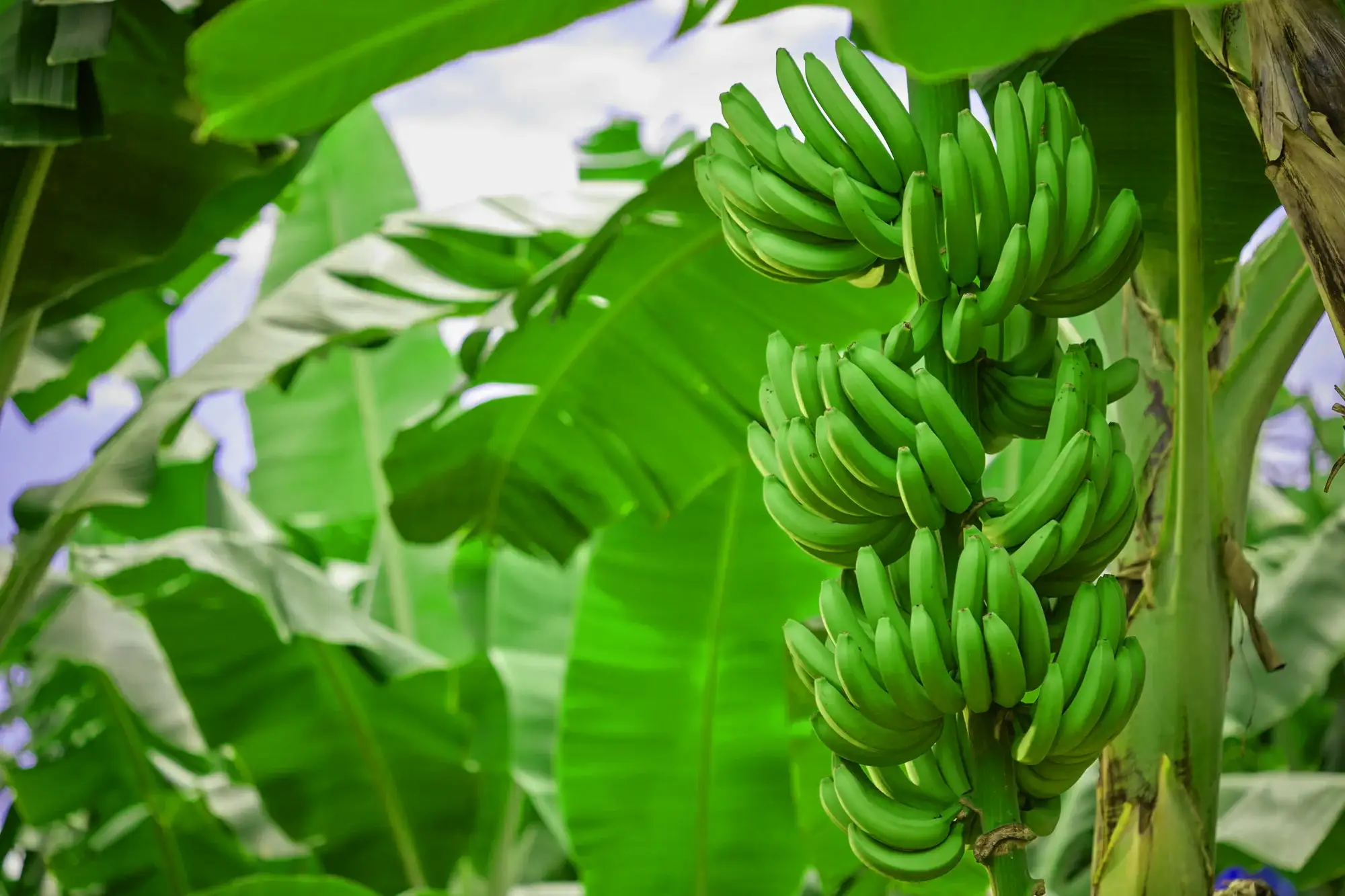
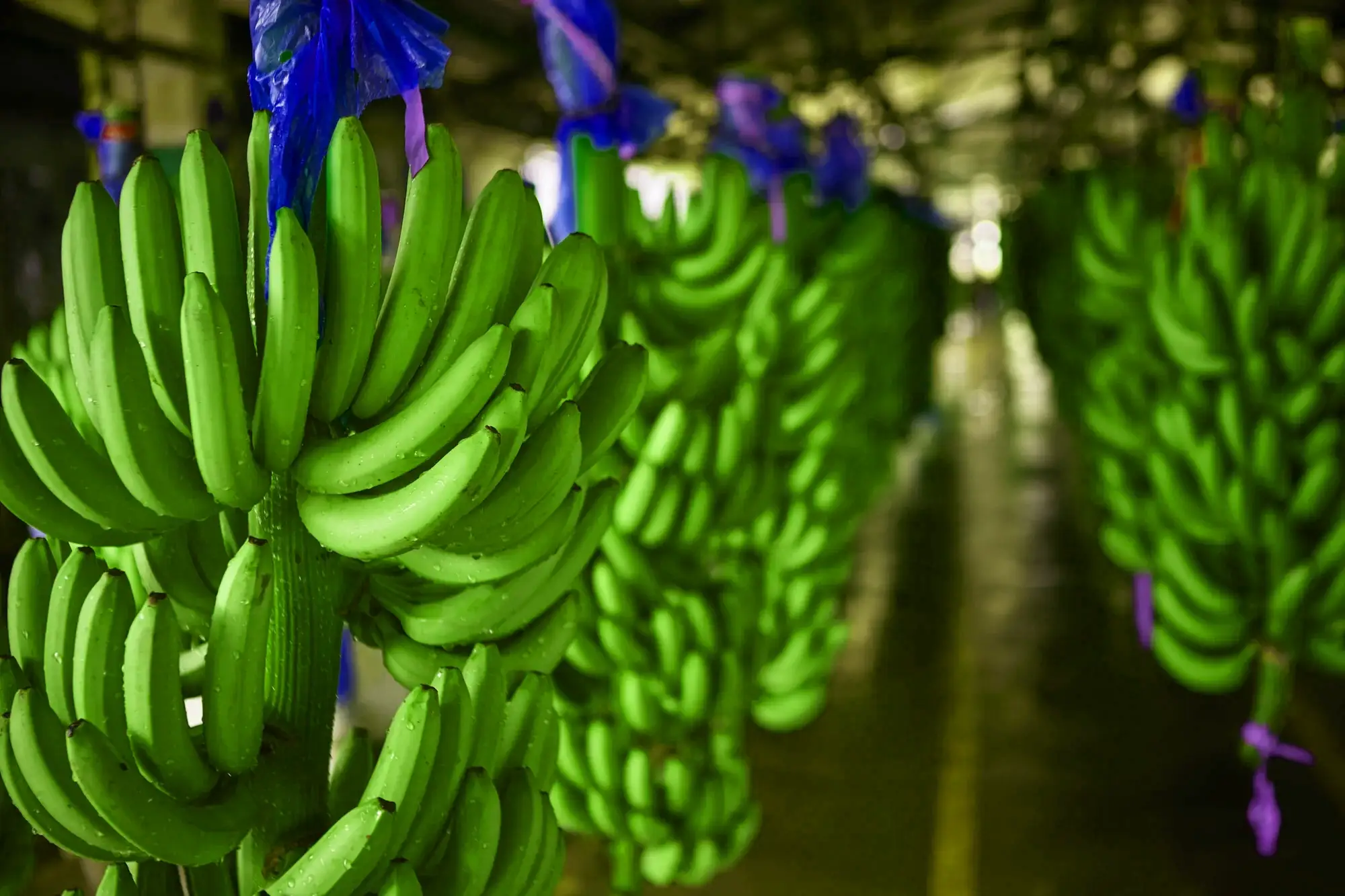
On the farm. That is where the Cavendish bananas for export are grown, both at Bonita Farms and on the farms of our network of partner producers and cooperatives. While it ripens on the plant, each bunch is covered with a protective bag, and that “bagging” doubles as a sector thermometer: according to Acorbanec, it helps anticipate how much fruit will be available for export in the following weeks.
The bunch is harvested green: according to the Global Cold Chain Alliance (GCCA) handling manual, bananas leave the tropics in the mature-green stage and only ripen once they reach their destination.
What happens during selection and packing?
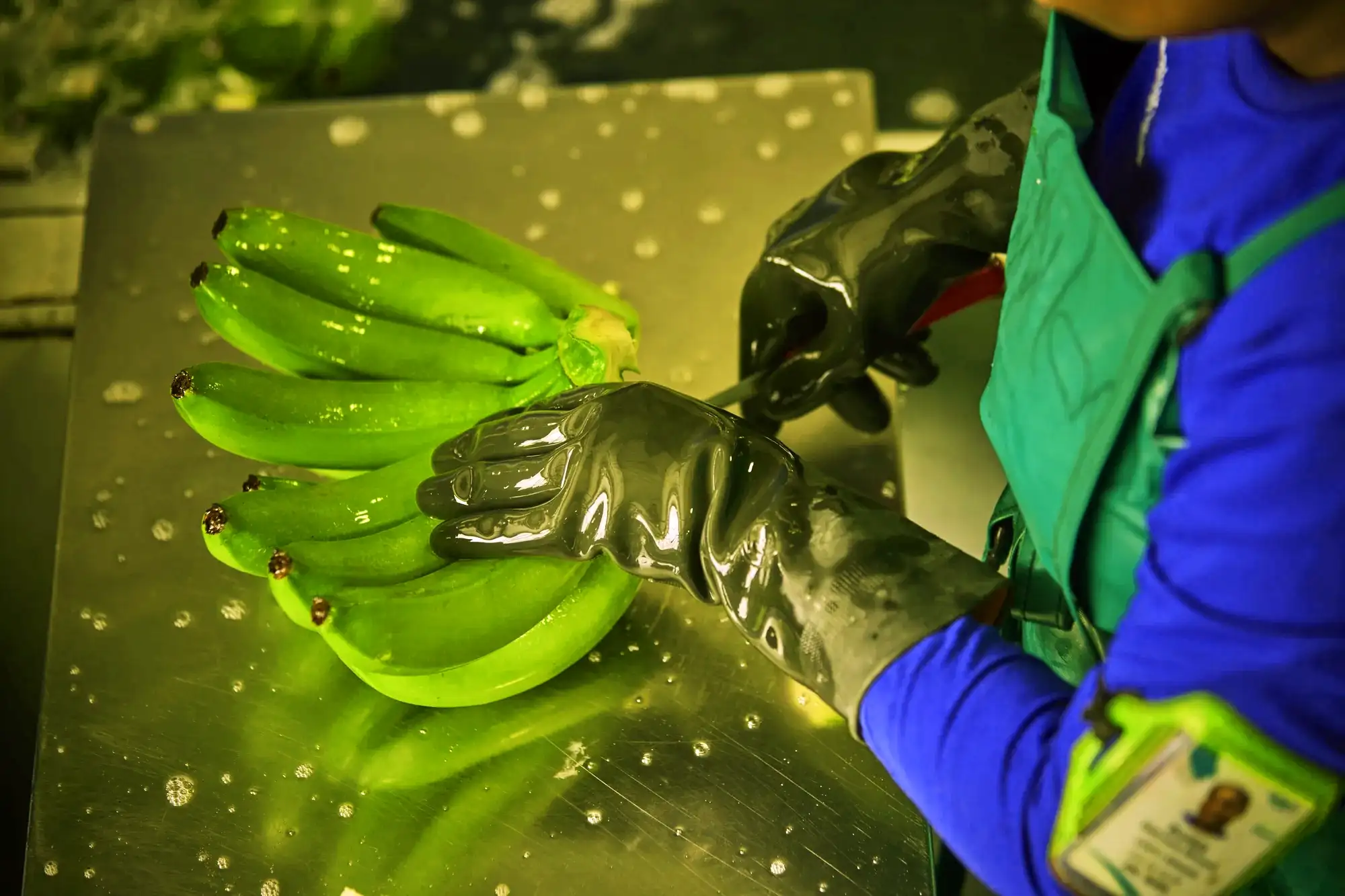
Bunches are selected and packed into export boxes. In Ecuador, the 22XU box is the dominant format: according to Acorbanec, it made up 83.22% of the boxes exported between January and November 2025.
Two links of the Corporación Noboa chain come in here: two carton companies and one plastics company that secure the packing. Having that link in-house means more control over what protects the fruit.
How does the box get to the port?
Over land, on a fleet of our own trucks. Boxes are loaded into containers and pass through the largest container yard in Ecuador, another link in the same chain. Every handover is a point where delays can appear, which is why it matters that the one who moves the fruit is the same one who answers for it.
Which ports do Ecuadorian bananas leave from?
Through three main gateways. According to Acorbanec data for January to November 2025, this is how the country’s boxes left:
- Guayaquil ports: 50.43%
- Posorja Deep Water Port: 28.05%
- Puerto Bolívar, in Machala: 21.52%
These are sector figures, not a description of any one customer’s route.
What happens during the sea voyage?
The ship works like a moving cold room. The GCCA recommends carrying green bananas at a pulp temperature of 13 to 14 °C, because below 13 °C the fruit can suffer chilling injury within hours. Bonita ships with its own vessels to destination markets, another link controlled end to end.
The durability of the fruit counts too: a thicker peel gives Bonita bananas 10 to 12 extra days in transit. Read more in what makes our bananas premium.
What happens when the box arrives?
The bananas are ripened in controlled rooms at 14 to 18 °C, using a natural gas, ethylene, applied for 24 to 48 hours. Depending on the temperature chosen, ripening can take from four to ten days, so the buyer decides when the fruit reaches the point of sale.
To ripen evenly, the GCCA recommends running air-circulation fans continuously and leaving air channels between boxes. In forced-air systems, boxes are palletised at origin and stay on their pallets throughout distribution, which reduces handling.
Which markets wait at the end of the journey?
According to FAO, world banana imports totalled about 20.6 million tonnes in 2025. The largest buyers were:
- European Union: 5.4 million tonnes, 26.1% of the world total.
- United States: just under 4 million tonnes, 19.3%.
- China: nearly 2 million tonnes, 9.6%.
- Russia: 1.4 million tonnes, 6.7%.
- Japan: 1.1 million tonnes, 5.1%.
Each destination has its own demands on size, colour and certification, so it pays to know the market’s requirements before building an order.
Why does an integrated chain matter?
Because every link you control is one less point of uncertainty. The Corporación Noboa chain brings together:
- Farm: own production at Bonita Farms and a network of partner producers.
- Carton and plastics: two carton companies and one plastics company for packing.
- Trucks: own fleet from the farm to the port.
- Container yard: the largest in Ecuador.
- Ships: own sea transport to destination markets.
Fewer intermediaries, more control, more trust. You can see how it fits together in About us and which certifications back the operation in Sustainability.
If you are an importer, supermarket or retailer and want to know how bananas would reach your market, write to us. If you are a grower, start here.
Sources
- FAO, Banana Market Review 2025 (Rome, 2026), on world imports: openknowledge.fao.org.
- Global Cold Chain Alliance, GCCF Commodity Storage & Handling Manual: Bananas (2024 revision): gcca.org.
- Acorbanec, exports from January to May 2026 and the link with bagging: acorbanec.com.
- Acorbanec, exports from January to November 2025 by box type and departure port: acorbanec.com.