In this article
A premium export banana is one that reaches its destination whole, firm and evenly coloured after several weeks of travel. At Bonita, that quality rests on a thicker peel, careful selection and packing, and a durability that adds 10 to 12 extra days in transit.
What does “premium” mean for an export banana?
For an importer, a supermarket or a retailer, the word turns into practical questions: how many days of margin the fruit has, whether the whole box arrives with the same size and colour, and how many pieces are lost on the way.
Bonita exports first-quality Cavendish bananas, in conventional and organic categories. Its defining trait is durability: a thicker peel that withstands long journeys and protects the fruit until it reaches its destination.
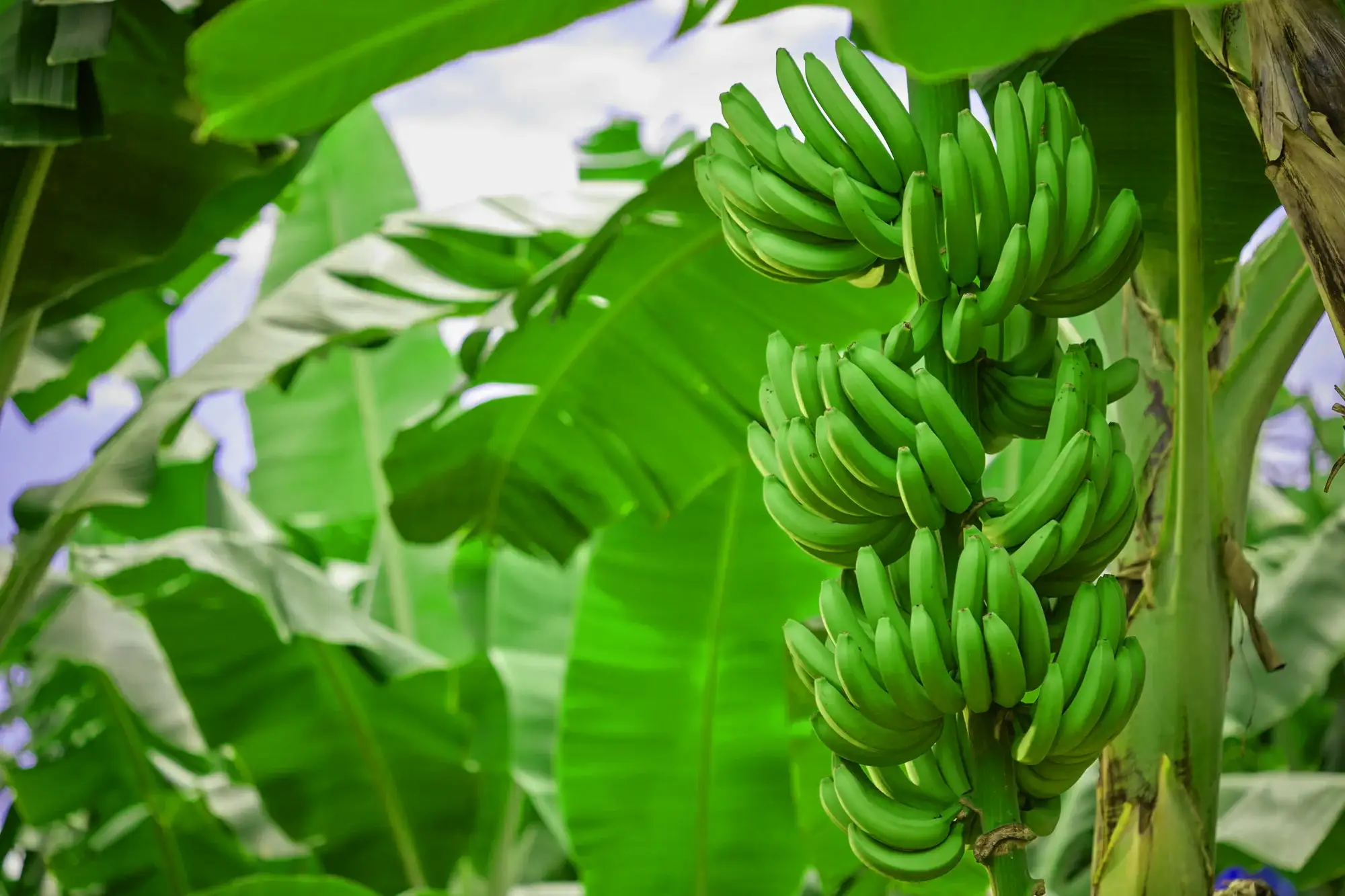
Why are export bananas shipped green?
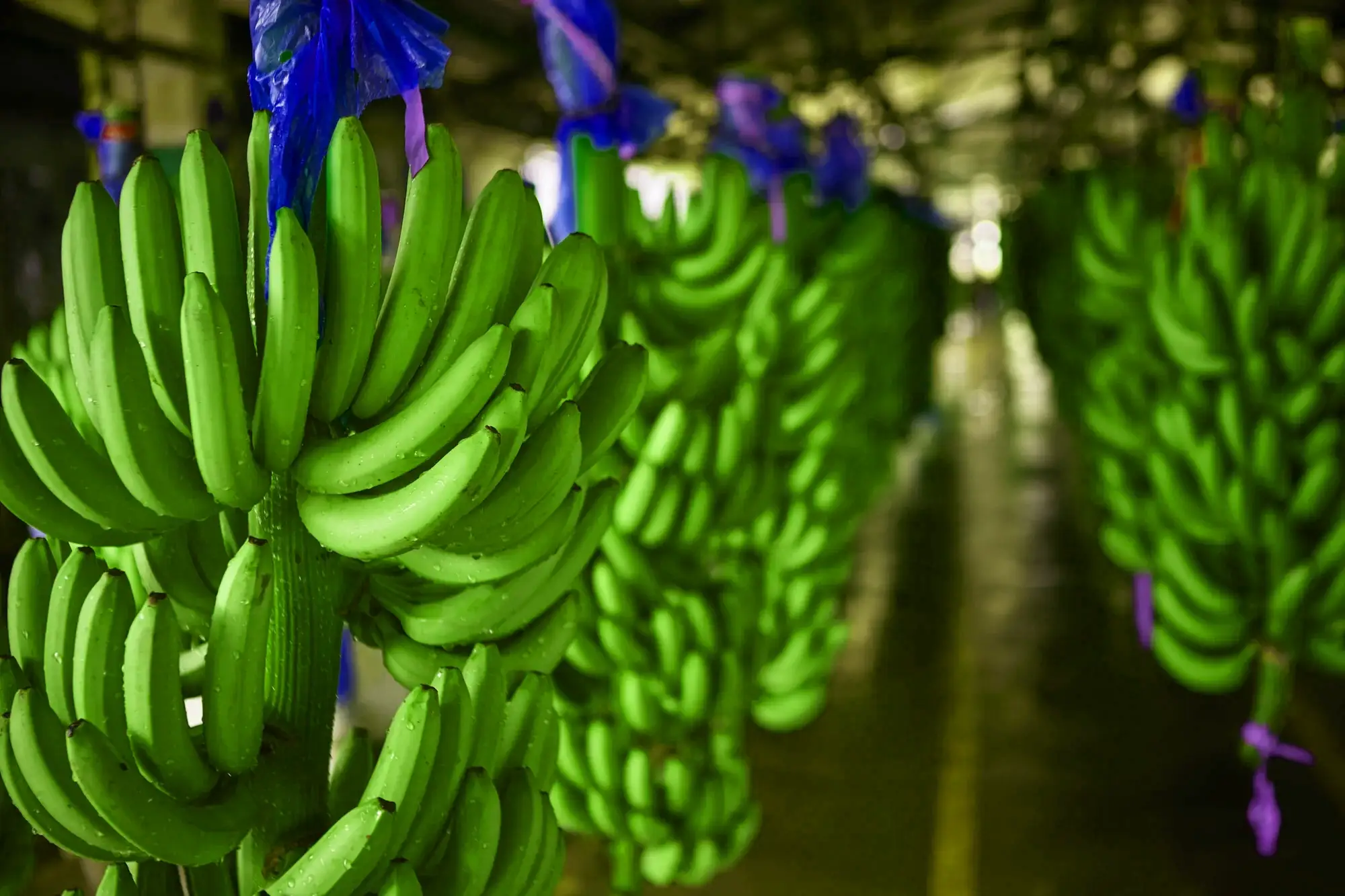
Export bananas do not travel ripe. According to the Global Cold Chain Alliance (GCCA) banana handling manual, revised in 2024, the fruit leaves the tropics in the mature-green stage, in refrigerated vessels or marine containers, and is ripened on arrival. That lets it cross thousands of kilometres and enter the ripening room exactly when the buyer decides.
What temperature do bananas need in transit?
The GCCA recommends carrying green bananas at a pulp temperature of 13 to 14 °C and a relative humidity of 90 to 95%. Below 13 °C the fruit can suffer chilling injury within 2 to 24 hours, and it shows after ripening: the peel turns dull and smoky yellow instead of bright.
That is why the cold chain cannot have gaps. Under the right conditions, the same manual says mature-green bananas can be kept for up to four weeks in ethylene-free air.
How does a thicker peel help?
It is the trait Bonita highlights: a thicker peel gives the banana the durability to withstand long journeys, with 10 to 12 extra days in transit. In practice, that margin gives the buyer more options for routing and for scheduling ripening and distribution.
It does not replace the cold chain: the two work together. The peel is a quality of the fruit; the right temperature is the operation’s responsibility.
What else protects the fruit during the voyage?
Beyond temperature, the GCCA manual points to several safeguards a good operator controls:
- High humidity. Holding 90 to 95% relative humidity prevents water loss, which darkens areas damaged by bruising.
- Ethylene control. This natural gas speeds up ripening. Keeping it below 1 ppm with scrubbers extends the life of green fruit.
- Modified atmosphere. With 2 to 5% oxygen and 2 to 5% carbon dioxide at 14 °C, transport is feasible for up to six weeks.
- Compatible cargo. Bananas are chilling-sensitive and need high humidity, so they should not travel with products that need different conditions, such as dry onions, garlic or nuts.
Each of these conditions is a fair question for any supplier.
What do selection and packing add?
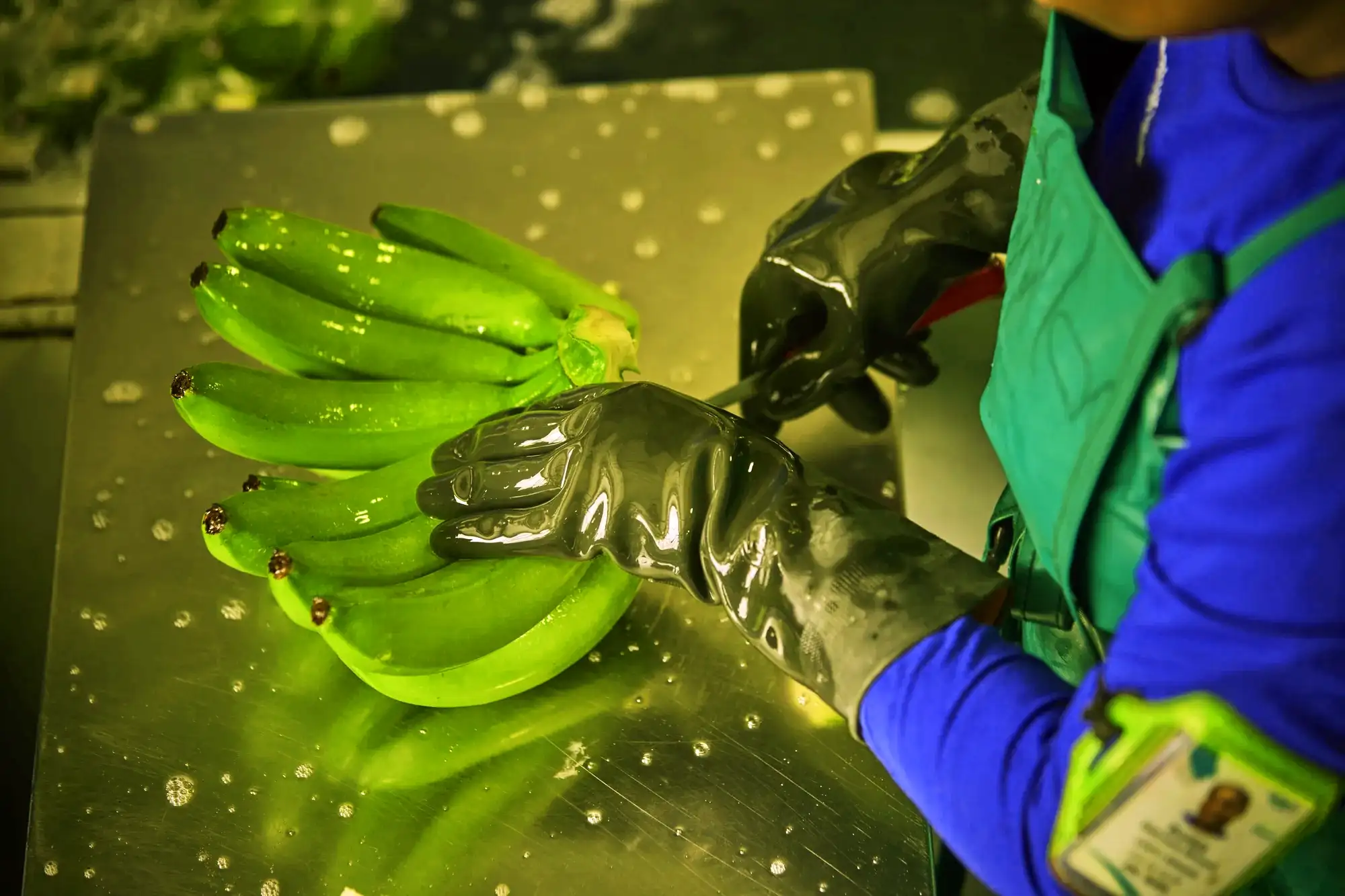
Before it boards the ship, each bunch is selected and packed with care, because a small defect at origin can grow during the voyage. In the Ecuadorian industry, the 22XU box is the dominant format: it accounted for 83.22% of the boxes exported between January and November 2025, according to Acorbanec.
Bonita’s packing is part of an integrated chain: two carton companies and one plastics company within Corporación Noboa. Controlling that link is part of controlling quality.
How do bananas ripen once they arrive?
The GCCA describes a controlled process. Green bananas are ripened in rooms at 14 to 18 °C and 90 to 95% relative humidity, and exposed to ethylene at about 100 ppm for 24 to 48 hours so they ripen evenly. Depending on the temperature chosen, ripening can take from four days to eight or ten.
For the buyer, this means being able to schedule the colour stage at which the fruit reaches the shelf.
What should you ask a premium banana supplier?
Before choosing, it is worth settling five questions:
- At what temperature does the fruit travel, and how is it monitored in transit?
- Which variety and category does the supplier offer: conventional or organic?
- Which certifications does it hold? Bonita holds Organic, Global G.A.P. and Rainforest Alliance.
- Who controls the chain from the farm to the port?
- Which box presentations and volumes can it offer?
You can see the categories on our Product page, read about the certifications in Sustainability and follow the journey of a box, from farm to port.
Are you an importer, supermarket or retailer? Tell us about your market and volume.
Sources
- Global Cold Chain Alliance, GCCF Commodity Storage & Handling Manual: Bananas (2024 revision): gcca.org.
- Acorbanec, exports from January to November 2025 by box type: acorbanec.com.